

The idea of a smart home has moved from science fiction into our everyday reality. A decade ago, most people imagined futuristic houses where robots served meals and gadgets obeyed every command. Today, thanks to rapid innovations in technology, smart homes are no longer just a luxury—they’re becoming the standard. With the rise of Internet of Things (IoT) devices, artificial intelligence, and voice assistants, homeowners can enjoy comfort, convenience, security, and energy savings like never before.
But with so many devices on the market, choosing the right ones can feel overwhelming. To help you cut through the noise, we’ve rounded up the five essential smart home devices you should consider in 2025. These are gadgets that go beyond being “cool toys”—they’re practical, reliable, and designed to improve daily life.
1. Smart Speakers & Voice Assistants

If the smart home had a brain, the smart speaker would be it. Devices like the Amazon Echo, Google Nest Hub, and Apple HomePod are more than just speakers—they’re command centers.
Imagine walking into your living room and saying, “Turn on the lights and play my evening playlist.” Within seconds, your home reacts. No fumbling for switches, no pulling out your phone. Smart speakers now integrate with thousands of compatible devices, from TVs and thermostats to vacuum cleaners.
In 2025, these assistants are becoming smarter than ever. They can recognize individual voices, making responses more personal. For instance, when you ask about your schedule, the assistant pulls data from your calendar—not your partner’s. They also support natural conversation, so instead of saying robotic phrases like “Set alarm for 6 AM,” you can casually say, “Wake me up early tomorrow.”
Why you need it: Smart speakers simplify everyday routines, entertain, and serve as the gateway to all your other devices.
2. Smart Lighting Systems

Lighting shapes the mood of a home, and with smart systems, you’re in full control. Instead of flipping switches, you can adjust brightness, set colors, or even automate schedules from your phone or by voice.
Brands like Philips Hue, Nanoleaf, and LIFX are leading the way with dynamic lighting that adapts to your lifestyle. Want to wake up naturally? Set your lights to simulate sunrise. Hosting a party? Switch to vibrant, colorful themes. Going on vacation? Program your lights to turn on at random times, giving the impression that someone is home.
Beyond aesthetics, smart lighting is eco-friendly. LED-based systems use less power, and scheduling ensures you never waste electricity by leaving lights on unnecessarily. Some systems even adjust automatically depending on daylight levels, saving energy without you noticing.
Why you need it: Smart lighting adds beauty, personalization, and energy savings to your home.
3. Smart Security Cameras & Doorbells
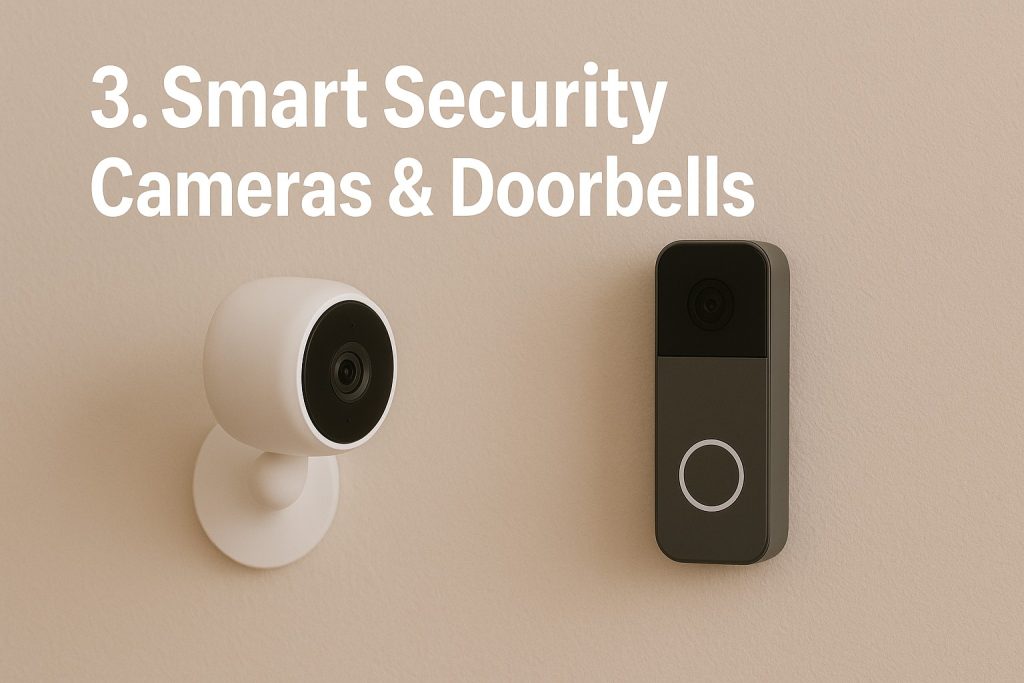
Nothing gives peace of mind like knowing your home is secure. Smart security cameras and video doorbells like Ring, Arlo, and Eufy have become household staples. They provide high-definition video feeds, motion detection, and cloud storage—all accessible from your smartphone.
Imagine being at work and receiving a notification that someone is at your door. With a tap, you can see who it is, talk to them through two-way audio, and even record the interaction. Advanced devices now use AI to differentiate between humans, animals, and vehicles, so you’re not bombarded with false alerts.
Many models also include night vision, facial recognition, and integration with broader security systems. Some can even trigger alarms or call emergency services automatically if suspicious activity is detected.
Why you need it: Modern smart security makes monitoring your home effortless and increases safety for your family.
4. Smart Thermostats

Heating and cooling consume a huge chunk of household energy bills. Smart thermostats like Nest, Ecobee, and Honeywell are game changers. They don’t just let you set temperatures remotely—they learn your habits and adjust automatically.
For example, if you usually leave for work at 9 AM, the thermostat will gradually reduce heating or cooling when you’re gone, saving energy. By the time you return, it restores your preferred temperature. Over time, it adapts to your lifestyle without needing constant input.
Some models use sensors in different rooms to optimize heating evenly, so you don’t end up with one room freezing and another boiling. They also generate energy reports, giving you insights into your consumption and ways to reduce waste.
Why you need it: Smart thermostats cut down on energy bills while keeping your home comfortable year-round.
5. Smart Kitchen Appliances

The kitchen is often called the heart of the home, and now it’s getting a high-tech makeover. Smart refrigerators can track expiration dates, suggest recipes based on what’s inside, and even create grocery lists. Ovens can preheat while you’re on the way home. Coffee machines can be programmed to have your brew ready the moment you wake up.
Beyond convenience, these appliances help with healthy living. Some devices integrate with nutrition apps to recommend balanced meals. Smart scales and blenders even track calories, making it easier to stay on top of fitness goals.
In 2025, more devices are adopting AI and machine learning, meaning your kitchen will eventually understand your cooking habits and recommend recipes that match your preferences.
Why you need it: Smart kitchens save time, reduce food waste, and make cooking more enjoyable.


